
Inquiry

Project Review

Machining

Quality Control

Pass/Fail

Delivery
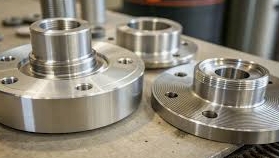
In modern engineering, manufacturers constantly seek materials and production methods that combine strength, precision, and weight reduction. Aluminum precision machining has become one of the most effective solutions for producing lightweight engineering components with high performance and reliability. Thanks to aluminum’s excellent machinability and mechanical properties, it is widely used in industries such as aerospace, automotive, electronics, robotics, and industrial equipment.
The Importance of Lightweight Engineering
Reducing component weight is a major objective in many engineering applications. Lightweight parts improve fuel efficiency, increase speed, reduce energy consumption, and enhance overall system performance. At the same time, components must maintain sufficient strength and durability to perform under demanding conditions.
Aluminum offers an ideal balance between low weight and mechanical performance, making it one of the most preferred materials for precision-machined components.
Excellent Strength-to-Weight Ratio
One of aluminum’s greatest advantages is its high strength-to-weight ratio. Compared to heavier metals such as steel, aluminum provides strong structural performance while significantly reducing overall component weight. This makes aluminum precision machining particularly valuable in applications where minimizing mass is critical.
In aerospace and automotive industries, lighter components contribute directly to improved fuel efficiency and operational performance.
Outstanding Machinability
Aluminum is known for its excellent machinability, allowing CNC machines to cut, mill, drill, and turn the material efficiently. Its softer structure compared to harder alloys enables faster cutting speeds, reduced tool wear, and smoother machining operations.
As a result, aluminum precision machining can achieve tight tolerances, fine details, and high-quality surface finishes with excellent production efficiency.
High Precision for Complex Designs
Modern engineering components often feature complex geometries and intricate features. Precision CNC machining enables manufacturers to produce aluminum parts with exceptional dimensional accuracy and repeatability.
Multi-axis machining systems can create detailed contours, thin walls, and complex cavities while maintaining tight tolerances. This precision is essential for industries that require reliable component integration and high-performance operation.
Corrosion Resistance and Durability
Aluminum naturally forms a protective oxide layer that provides strong corrosion resistance. This property makes aluminum precision-machined parts suitable for demanding environments, including outdoor and marine applications.
Additional finishing processes such as anodizing can further enhance corrosion resistance, wear protection, and appearance.
Improved Thermal and Electrical Conductivity
Aluminum also offers excellent thermal and electrical conductivity, making it ideal for electronics, heat sinks, and electrical components. Precision machining allows manufacturers to create detailed cooling structures and conductive parts that improve overall system efficiency.
Cost-Effective Manufacturing Solution
Because aluminum is easy to machine, production times are often shorter compared to harder metals. Faster machining speeds and lower tool wear contribute to reduced manufacturing costs. This makes aluminum precision machining a cost-effective solution for both prototypes and production runs.
Its recyclability also supports sustainable manufacturing practices and reduces material waste.
Applications Across Multiple Industries
Aluminum precision machining is widely used for manufacturing:
Aerospace structural components
Automotive housings and brackets
Robotics and automation parts
Electronic enclosures and heat sinks
Medical equipment components
Industrial machinery parts
These applications benefit from aluminum’s combination of lightweight properties, precision, and durability.
Aluminum precision machining is ideal for lightweight engineering designs because it combines excellent machinability, high strength-to-weight ratio, corrosion resistance, and cost efficiency. By enabling the production of precise, durable, and lightweight components, aluminum machining supports innovation and performance across a wide range of modern industries.
As engineering demands continue to evolve, aluminum precision machining will remain a key manufacturing solution for creating advanced lightweight products with superior functionality and reliability.
About AJL Machining:
AJL Machining is a professional and industry-leading one-stop workshop for custom metal parts services. We have our own factory and a reliable network of partners that enable us to cater to your requirements ranging from prototypes to large-scale production. Our competitive edge is our ability to ensure that all of your parts are produced according to specifications, within budget, and delivered on time to meet your evolving demands. Presently, we serve over 80% of our business to multinational corporations in China, as well as overseas customers.
To learn more, please don't hesitate to contact us via email at sales@ajlmachining.com, or visit our website at www.ajlmachining.com

AJL Machining is a professional and industry-leading one-stop shop for custom metal parts services. We have our own factory and a reliable network of partners that enable us to cater to your requirements ranging from prototypes to large-scale production.
Add: No 58, Chenghu Road, Kunshan, Suzhou City, Jiangsu Province, China 215333
Email:sales@ajlmachining.com
Tel: +8613522650203
 English
 China
China