
Inquiry

Project Review

Machining

Quality Control

Pass/Fail

Delivery
Brass CNC turned components are widely used in modern manufacturing because of their excellent machinability, corrosion resistance, electrical conductivity, and dimensional stability. From electrical connectors and plumbing fittings to automotive parts and industrial machinery components, precision-turned brass parts play an important role in applications that require reliable performance and consistent quality.
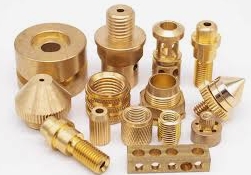
With the development of CNC machining technology, manufacturers can produce complex brass components with accurate dimensions, repeatable tolerances, and smooth surface finishes. CNC turning also supports flexible production volumes, making it suitable for both customized prototypes and large-scale manufacturing.
For businesses sourcing precision metal parts, understanding the materials, machining processes, applications, and quality requirements of brass CNC turned components can help improve product performance and manufacturing efficiency.
1. What Are Brass CNC Turned Components?
Brass CNC turned components are precision-machined parts manufactured from brass using computer numerical control (CNC) turning equipment. During the turning process, a brass workpiece rotates at a controlled speed while a cutting tool removes material to achieve the required shape and dimensions.
CNC turning is particularly suitable for components with cylindrical or symmetrical geometries. Depending on the machine configuration and component design, manufacturers can perform several operations, including:
Facing: Produces flat end surfaces and controls component length.
External turning: Creates accurate outside diameters and cylindrical profiles.
Internal boring: Produces accurately sized holes and internal features.
Threading: Manufactures internal and external threads for mechanical connections.
Grooving: Creates grooves, recesses, and other functional features.
Drilling: Produces holes for assembly, fluid flow, or electrical connections.
Advanced CNC turning centers equipped with live tooling can also perform selected milling and cross-drilling operations. This allows more complex brass components to be manufactured with fewer setups, improving production efficiency and positional accuracy.
2. Why Brass Is an Ideal Material for CNC Turning
Brass is an alloy primarily composed of copper and zinc. Different brass grades offer different combinations of mechanical strength, corrosion resistance, machinability, and electrical or thermal conductivity.
One of the main advantages of brass is its excellent machinability. Many commonly used free-machining brass grades allow cutting tools to remove material efficiently while producing good surface finishes. This characteristic makes brass suitable for high-volume precision turning applications.
Other important material advantages include:
Corrosion resistance: Brass generally provides good resistance to corrosion in many environments, making it suitable for plumbing fittings, valves, connectors, and selected marine applications. Its performance depends on the alloy grade and exposure conditions.
Electrical conductivity: Brass offers useful electrical conductivity and is commonly used for terminals, electrical connectors, and conductive fittings where its mechanical and manufacturing properties are appropriate.
Dimensional stability: Properly selected brass materials can maintain consistent dimensions during machining and service, supporting precision assembly requirements.
Good formability and mechanical properties: Different brass grades offer varying levels of strength, ductility, and hardness, allowing manufacturers to select materials according to specific application requirements.
Attractive appearance: Brass has a distinctive golden color and can be polished, plated, or otherwise finished for components where appearance is important.
These properties make brass a versatile material for producing precision components across multiple industrial sectors.
3. Common Brass Grades Used in CNC Turning
Selecting the correct brass grade is essential for achieving the required machining performance and finished-part properties.
Several brass materials are commonly considered for CNC turned components.
C36000 Free-Cutting Brass
C36000 is widely recognized for its excellent machinability. It is frequently used for precision turned parts such as fittings, connectors, fasteners, valve components, and threaded inserts. Its machining characteristics make it particularly suitable for production involving numerous small or medium-sized components.
C26000 Cartridge Brass
C26000 offers a useful combination of strength, ductility, and corrosion resistance. It is commonly used in formed products, electrical applications, and selected precision components where its mechanical properties are beneficial.
C37700 Forging Brass
C37700 is commonly associated with hot-forging applications and can also be machined into components requiring suitable strength and machinability. It may be considered for valves, fittings, and mechanical parts depending on the design and manufacturing process.
Other Copper-Zinc Alloys
Different brass grades are available for applications requiring specific mechanical, corrosion-resistance, or conductivity characteristics. The choice should consider the component's operating environment, applicable standards, and manufacturing requirements.
It is important to confirm the exact alloy designation rather than specifying only "brass." Material selection can affect machinability, finished-part performance, and compliance with application-specific requirements.
4. Applications of Brass CNC Turned Components
Brass CNC turned components are used in many industries because of their versatility and reliable machining characteristics.
Electrical and Electronics Industry
Brass is frequently used to manufacture electrical terminals, connector pins, contact components, threaded inserts, and cable fittings. Its electrical conductivity and machinability make it suitable for producing small components with accurate dimensions.
CNC turning helps maintain consistent diameters, thread dimensions, and contact geometries, which are important for reliable electrical connections.
Plumbing and Fluid Control Systems
Valves, adapters, pipe fittings, connectors, and water-system components often incorporate precision-machined brass parts. These components may require accurate threads, sealing surfaces, and internal passages.
CNC turning can produce these features consistently, helping manufacturers meet assembly and functional requirements. The selected brass grade must also be suitable for the fluid, pressure, and regulatory requirements of the application.
Automotive Manufacturing
Automotive systems use brass components in selected connectors, sensors, fittings, terminals, and mechanical assemblies. Precision machining helps ensure accurate interfaces and reliable installation.
Depending on the application, brass turned parts may need to withstand vibration, temperature changes, mechanical stress, and environmental exposure.
Industrial Machinery
Industrial equipment may use brass bushings, sleeves, threaded components, fittings, and precision spacers. These parts can provide useful wear characteristics and corrosion resistance in suitable operating conditions.
Telecommunications and Instrumentation
Precision brass components are also used in selected communication connectors, instrument fittings, and equipment housings. Accurate machining is important for maintaining assembly compatibility and consistent product performance.
5. How CNC Turning Improves Precision and Production Efficiency
CNC turning offers several advantages over conventional manual machining, particularly when manufacturing components with demanding dimensional requirements.
Repeatable machining operations: CNC programs control cutting paths, spindle speeds, feed rates, and tool movements. Once a process has been validated, the same machining sequence can be repeated across production batches.
Consistent dimensions: Accurate tool positioning and suitable workholding help maintain specified diameters, lengths, grooves, and thread features.
Reduced manual intervention: Automatic tool changers and programmable machining sequences reduce the need for frequent manual adjustments.
Complex component production: Modern CNC turning centers can manufacture parts with multiple diameters, internal features, grooves, and threads. Live tooling can further expand machining capabilities.
Shorter production cycles: Combining several operations in one setup can reduce workpiece handling and machine transfers, improving overall manufacturing efficiency.
However, machining accuracy depends on more than CNC programming. Tool wear, machine condition, material quality, workpiece clamping, cutting parameters, and temperature can all influence the final dimensions.
Manufacturers should therefore optimize the complete machining process rather than relying solely on the machine's advertised accuracy.
6. Surface Finishing Options for Brass Turned Parts
Surface finishing can improve the appearance, corrosion performance, and functional characteristics of brass CNC turned components.
Depending on the application, common finishing options include:
Polishing: Improves surface smoothness and creates a cleaner, more attractive appearance.
Brushing: Produces a controlled directional surface texture.
Electroplating: Applies a metallic coating, such as nickel or chrome, when additional surface protection or specific appearance requirements are needed.
Passivation or chemical treatments: Selected treatments may be used to modify surface behavior, depending on the brass alloy and application.
Deburring: Removes sharp edges and machining burrs that could affect assembly or safety.
The appropriate finishing process depends on the component's material, operating environment, dimensional tolerances, and appearance requirements.
For parts with tight dimensional tolerances, finishing allowances should be considered during the initial design and machining stages. Coating thickness, for example, may affect thread fit, hole dimensions, and assembly clearances.
7. Quality Control for High-Precision Brass CNC Turned Components
Quality control is essential to ensure that brass turned components meet engineering drawings and customer specifications.
A reliable inspection process should cover the entire production workflow, beginning with raw material verification and continuing through machining and final inspection.
Important inspection procedures include:
Material inspection: Verify the brass grade and relevant material documentation to ensure the correct alloy is used.
Dimensional measurement: Use micrometers, calipers, bore gauges, and other suitable instruments to check outside diameters, inside diameters, lengths, and critical dimensions.
Thread inspection: Thread gauges can verify thread pitch, form, and fit for internal and external threaded features.
Surface quality inspection: Examine components for burrs, scratches, tool marks, cracks, and other surface defects.
Geometric inspection: Check concentricity, roundness, perpendicularity, and other geometric characteristics where specified.
Final inspection and documentation: Maintain inspection records and provide reports or material certificates when required by the customer.
For components used in critical assemblies, first-article inspection and batch inspection plans can help identify potential problems before they affect larger production quantities.
8. Choosing a Reliable Brass CNC Turning Manufacturer
Selecting the right manufacturing partner is important for obtaining consistent brass CNC turned components at a competitive cost.
Businesses should evaluate several factors before placing an order.
First, review the manufacturer's CNC turning capabilities. Equipment specifications, spindle capacity, machining accuracy, live-tooling availability, and production capacity should match the component requirements.
Second, assess material sourcing and traceability. A reliable supplier should understand different brass grades and be able to provide relevant material documentation when required.
Third, examine the manufacturer's quality-control system. Ask about inspection equipment, measurement procedures, tolerance verification, and nonconforming-part management.
Fourth, consider production flexibility. A capable manufacturer should be able to support prototype development, small-batch orders, and repeat production according to customer demand.
Finally, evaluate technical communication and delivery management. Clear communication about drawings, tolerances, finishing requirements, production schedules, and packaging can help reduce manufacturing risks.
Providing complete technical specifications at the quotation stage also helps suppliers recommend suitable machining processes and identify opportunities to improve manufacturability.
Brass CNC turned componentsare essential to many high-precision industrial applications, including electrical equipment, plumbing systems, automotive manufacturing, industrial machinery, and instrumentation.
The combination of excellent machinability, useful corrosion resistance, electrical conductivity, and versatile material grades makes brass a practical choice for producing accurate and reliable metal parts. With modern CNC turning technology, manufacturers can achieve repeatable dimensions, complex geometries, and efficient production across different order quantities.
For businesses seeking dependable precision components, choosing an experienced CNC machining manufacturer is essential. By combining appropriate brass materials, optimized machining processes, suitable surface finishing, and rigorous quality control, manufacturers can deliver brass CNC turned components that meet demanding industrial specifications while supporting long-term production efficiency.
About AJL Machining:
AJL Machining is a professional and industry-leading one-stop workshop for custom metal parts services. We have our own factory and a reliable network of partners that enable us to cater to your requirements ranging from prototypes to large-scale production. Our competitive edge is our ability to ensure that all of your parts are produced according to specifications, within budget, and delivered on time to meet your evolving demands. Presently, we serve over 80% of our business to multinational corporations in China, as well as overseas customers.
To learn more, please don't hesitate to contact us via email at sales@ajlmachining.com, or visit our website at www.ajlmachining.com

AJL Machining is a professional and industry-leading one-stop shop for custom metal parts services. We have our own factory and a reliable network of partners that enable us to cater to your requirements ranging from prototypes to large-scale production.
Add: No 58, Chenghu Road, Kunshan, Suzhou City, Jiangsu Province, China 215333
Email:sales@ajlmachining.com
Tel: +8613522650203
 English
 China