
Inquiry

Project Review

Machining

Quality Control

Pass/Fail

Delivery
Tungsten, the metal with the highest melting point, a density approaching that of gold, and a hardness that stops most cutting tools in their tracks. When engineers need a material that won't soften at extreme temperatures, won't degrade in aggressive corrosive environments, and won't compromise in precision applications, tungsten is often the only choice. But turning this material into usable precision parts is one of the most formidable challenges in manufacturing. Tungsten machining services exist precisely to bridge the gap between "ideal material" and "manufacturable part."
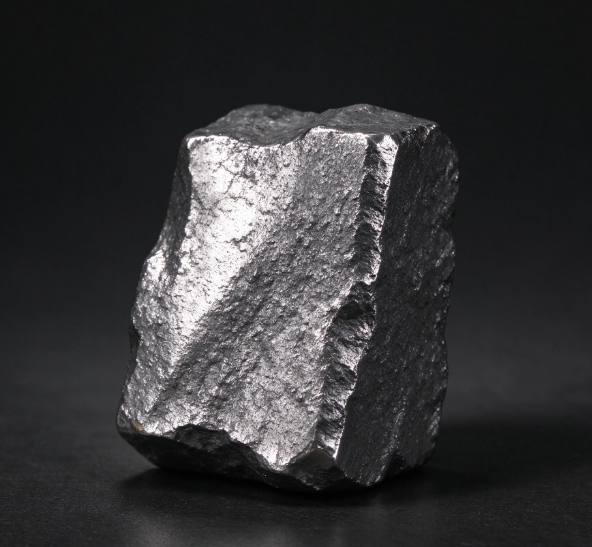
Why Tungsten Is So Difficult to Machine
Tungsten's machining difficulty stems from its physical nature. Extremely high elastic stiffness means the cutting forces required to machine tungsten alloys far exceed those for most metals, and tools must possess exceptional rigidity to cut without deflecting. At the same time, tungsten is highly abrasive, and the heat generated by high-speed, heavy cutting rapidly wears tools. One shop foreman with decades of experience described it bluntly: "I can cut titanium all day, but tungsten—you have to give it time. You can't push it."
More troublesome still is tungsten's ductile-to-brittle transition temperature. Near room temperature, tungsten and its alloys exhibit pronounced brittleness, and cutting tends to produce brittle fracture rather than plastic deformation. This not only affects surface quality but also accelerates tool failure. This means machining tungsten requires not just "a harder tool" but a redesign of the entire cutting environment.
The Underlying Logic of Equipment and Tooling: Rigidity Above All
Successful tungsten machining services are built first on a clear-eyed assessment of equipment selection. Machining tungsten alloys requires high torque at low speeds, not light cutting at high speeds. This means machine tools must possess extraordinary structural rigidity to suppress any tiny vibration during cutting. As practitioners summarize: "If vibration occurs, the tool will chip."
Workholding is no less important than the machine itself. When machining high-density tungsten alloy parts, the workpiece must be firmly constrained with no allowance for displacement or chatter. Some machiners have specially designed heavy-duty custom tooling for this purpose, such as thick tombstone fixtures that can hold multiple workpieces simultaneously to enhance clamping rigidity and repeat positioning accuracy. For deep cavity machining—such as grooves requiring six inches of tool overhang to reach—the rigidity of the tool itself becomes the bottleneck. Solutions include solid carbide tool shanks paired with heat-shrink holders to minimize deflection from overhang.
Cooling strategy also requires targeted adjustment. Although sulfurized oil is considered an ideal cooling medium for machining tungsten, switching coolants entirely in a shop that processes multiple materials is not realistic. A practical compromise is to raise the coolant's oil-to-water ratio to 20% to improve lubricity and tool life.
Tool Selection and Process Strategy: Shear, Not Push
Tungsten's cutting mechanics require tools to remove material by "shearing" rather than "pushing." This means high positive rake angles and sharp edges are fundamental requirements. Dulled tools merely push the material aside, causing work hardening, surface tearing, and rapid tool wear. In terms of tool materials, coated carbide and polycrystalline diamond (PCD) are proven solutions, with PCD performing better in turning, where the wear mechanisms are predominantly abrasive wear and diffusion-dissolution.
For complex geometries or scenarios where traditional cutting is inadequate, non-traditional machining methods offer complementary pathways. The "cold processing" characteristics of femtosecond lasers enable precision removal with extremely low thermal damage, while water-jet-guided laser shows advantages in controlling taper and suppressing oxide layers. Electrical discharge machining (EDM) can be used for complex structures, but its thermal ablation nature brings risks of recast layers and microcracks, requiring careful evaluation for parts with stringent surface integrity requirements. At the interface of academia and industry, hybrid processes such as electrically assisted cutting and cryogenic cooling are being explored, with the goal of reducing cutting forces while improving surface quality.
Where Is the Ceiling of Precision?
When equipment and processes are correctly configured, the precision achievable in tungsten machining is sufficient to meet the most demanding applications. A case disclosed by a specialized Japanese machiner shows that the inner diameter of a pure tungsten part at φ6mm can achieve ±3 μm precision and 1 μm roundness, entirely through turning without subsequent grinding. In terms of surface roughness, the inner diameter sidewall achieves 0.4 Ra, while the bottom face (where centerline speed approaches zero) still maintains 0.6 Ra, with flatness reaching 2 μm. Swiss company Décovi reports that on parts up to 40mm in diameter, tolerances can be controlled to ±3 μm, with integrated capabilities spanning cleaning, inspection, and surface treatment.
Behind these numbers is the accumulation of process discipline: the geometric parameters of every tool, the repeat positioning of every setup, and the batch consistency of every material lot must all be brought within controllable scope. In tungsten machining, there is no room for "close enough."
The Real Dividing Line in Service Capability
When selecting a tungsten machining service, the equipment list is only the starting point. What truly distinguishes a specialized machiner from an ordinary shop comes down to three things:
whether they possess a process database specifically developed for tungsten (rather than simply adjusting parameters used for steel or titanium)
whether they have a complete closed loop from fixture design to tool management
whether they understand the constraints that tungsten's brittle nature imposes on workholding and cutting paths
A machiner capable of consistently delivering tungsten parts to ±3 μm is valuable not because they own a particular high-end machine tool, but because they know under what conditions that machine should not be used.
For engineers seeking a tungsten machining partner, perhaps the most effective screening method is to ask directly: when was the last time you experienced tool chipping due to vibration, and how did you solve it? Those who can answer this question clearly have truly mastered this metal.
About AJL Machining:
AJL Machining is a professional and industry-leading one-stop workshop for custom metal parts services. We have our own factory and a reliable network of partners that enable us to cater to your requirements ranging from prototypes to large-scale production. Our competitive edge is our ability to ensure that all of your parts are produced according to specifications, within budget, and delivered on time to meet your evolving demands. Presently, we serve over 80% of our business to multinational corporations in China, as well as overseas customers.
To learn more, please don't hesitate to contact us via email at sales@ajlmachining.com, or visit our website at www.ajlmachining.com

AJL Machining is a professional and industry-leading one-stop shop for custom metal parts services. We have our own factory and a reliable network of partners that enable us to cater to your requirements ranging from prototypes to large-scale production.
Add: No 58, Chenghu Road, Kunshan, Suzhou City, Jiangsu Province, China 215333
Email:sales@ajlmachining.com
Tel: +8613522650203
 English
 China